
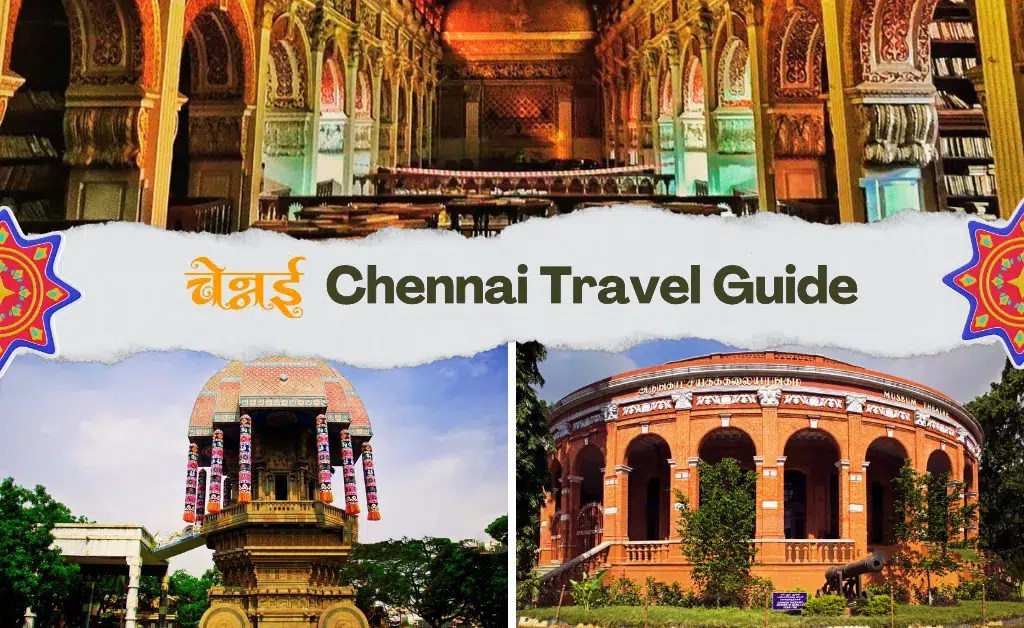
Most people pass through Chennai on their way somewhere else. That’s a mistake.
India’s fourth-largest city is a living, breathing contradiction — one of the most traditionally rooted cities on the subcontinent, and at the same time, a booming tech hub with a coastline that could rival any beach destination in South Asia. First-timers often arrive confused and leave converted.
This Chennai travel guide is written specifically for people who have never been — whether you’re a domestic traveller flying in from Delhi or Mumbai, or an international visitor making Tamil Nadu your next destination. By the time you finish reading, you’ll know exactly where to go, what to eat, how to get around, and what not to do.
Let’s start from the beginning.
Table of Contents
✦ Quick Answer
Chennai is a coastal South Indian city that blends ancient temple culture, Dravidian architecture, world-class cuisine, and a thriving arts scene. First-time visitors need 3–4 days minimum to cover the highlights. The best time to visit is between November and February, when temperatures drop to a manageable 24–28°C and the city is at its most vibrant.
Why Chennai Deserves More Than a Layover
Here’s the honest truth: Chennai doesn’t sell itself the way Jaipur or Goa does.
There’s no single postcard moment. No one iconic building. What Chennai has instead is a texture — the smell of jasmine garlands outside a temple at 6am, the sound of Carnatic violin drifting out of a practice room in Mylapore, the particular satisfaction of a perfectly made filter coffee that no café in any other Indian city can quite replicate.
It’s a city you feel before you understand.
Unlike Bangalore, which has largely shed its old-city character in favour of glass offices and craft beer bars, Chennai has held on. The old and new coexist in a way that feels genuinely lived-in rather than curated for tourism. That’s rare, and it’s worth 4 days of your life.
What Makes Chennai Different from Other South Indian Cities
Visitors familiar with Bengaluru or Hyderabad often arrive expecting something similar. They’re caught off guard by how distinctly Tamil Chennai feels.
The city is fiercely proud of its language and culture. Tamil is everywhere — signboards, conversations, menus, cinema billboards that cover entire building facades. This isn’t hostility; it’s identity. Most Chennaiites speak at least some English, and locals are generally warm and willing to help a confused first-timer.
A few things that genuinely set Chennai apart:
- The music and dance tradition. Chennai is the global capital of Carnatic classical music and Bharatanatyam dance. The December Music Season — now running from mid-November through January — draws performers and audiences from across the world. If your trip overlaps, don’t miss it.
- The coastline. Marina Beach is the second-longest urban beach in the world. It’s not a beach you sunbathe on (the undercurrents are dangerous), but it’s a beach you live on — morning walkers, kite sellers, bajji stalls, and the entire city out for its daily constitutional.
- The food seriousness. Chennai takes its cuisine personally. A bad idli is not an acceptable idli. The filter coffee ritual is non-negotiable. The city’s relationship with food is closer to religion than recreation.
Best Time to Visit Chennai
Chennai sits on the Coromandel Coast, which means its climate doesn’t follow the rest of India’s logic.
| Season | Months | What to Expect |
| Best time | November – February | 24–28°C, dry, pleasant, festive season |
| Warm but manageable | March – April | Temperatures climbing, fewer crowds |
| Hot and humid | May – June | 38–42°C, punishing heat, low tourist footfall |
| Southwest monsoon | July – September | Patchy rain, relatively cooler |
| Northeast monsoon | October – November | Heavy rain, some flooding risk — plan carefully |
The northeast monsoon is what catches first-timers out. Unlike most of India, which gets its main monsoon from June to September, Chennai gets the bulk of its rainfall in October and November. The 2021 and 2022 seasons both caused significant flooding in low-lying areas. If you’re visiting in October, buy travel insurance and keep an eye on the IMD forecast.
The sweet spot for first-timers is December. The city is cool, the Music Season is on, and Pongal preparations (the Tamil harvest festival, celebrated in January) give the city a particular energy.
Not sure which month works best for your schedule? We put together a month-by-month breakdown of Chennai’s weather to help you pick the right window.

How Many Days Do You Actually Need?
The honest answer: 3 days is the minimum, 5 days is comfortable, 7 days is indulgent.
Here’s how to think about it:
3 days — You’ll cover Marina Beach, Kapaleeshwarar Temple, Mylapore’s lanes, Fort St. George, and eat extremely well. You won’t have time for day trips.
4–5 days — Add DakshinaChitra, a day in Mahabalipuram (about 60km south), and an evening concert or Bharatanatyam performance if timing aligns.
6–7 days — You can now do Pondicherry as an overnight trip, explore the Chettinad region, or go north to Kanchipuram for its extraordinary silk-weaving and temple heritage.
Don’t try to do all of this in 3 days. Chennai rewards slow travel. The city is not a theme park — it’s a city that opens up the more time you give it.
Getting to Chennai
By Air — Chennai International Airport (MAA)
Chennai’s airport is one of the busiest in South India, with direct connections to most major Indian cities and international routes to Southeast Asia, the Middle East, the UK, and Singapore.
A few things to know the moment you land:
Pre-paid taxis are your safest bet for the airport transfer. The counters are inside the arrivals hall itself — look for them before you exit the building. As of 2025, expect to pay ₹400–600 for most city-centre destinations (T. Nagar, Mylapore, Egmore). Don’t accept unsolicited offers from drivers approaching you outside — the markup can be significant.
Ola and Uber both operate from the airport, but require you to walk to a designated pickup zone. The apps will show the pickup point on the map. This option is often 30–40% cheaper than the pre-paid counter.
The Chennai Metro connects to the airport. The Green Line (Line 1) stops at the airport and takes you to key destinations like Alandur, CMBT (the main bus terminus), and Little Mount. It’s the most affordable option at ₹15–50 depending on your destination, and avoids traffic entirely. Not ideal if you’re carrying large luggage, but perfectly good for light travellers.
Travel time from the airport to the city centre is 30–60 minutes depending on traffic. If you’re arriving between 8–10am or 5–8pm on a weekday, factor in an extra 20–30 minutes. Chennai’s traffic during peak hours is genuinely severe on certain corridors.
By Train — Central and Egmore Stations
Chennai has two main railway stations, and which one you arrive at depends on where you’re coming from.
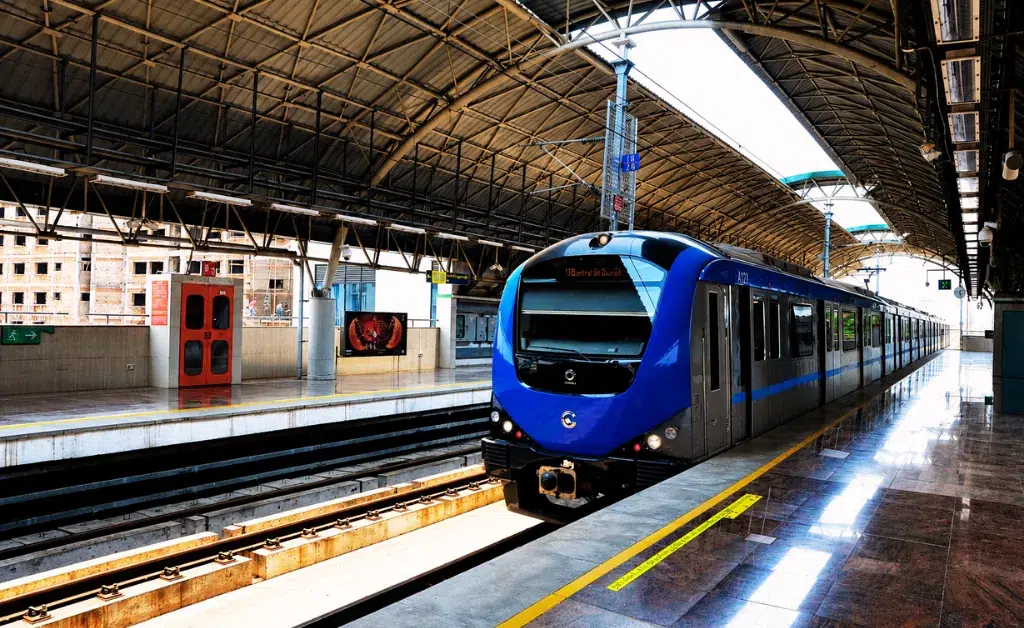
Chennai Central (MGR Chennai Central) handles long-distance trains from the north — Delhi, Mumbai, Kolkata, Bengaluru, and Hyderabad. It’s well-located in the heart of the city, connected to the Metro, and surrounded by budget hotels and restaurants.
Chennai Egmore handles trains from southern Tamil Nadu — Madurai, Trichy, Rameswaram, and Kanyakumari. If you’re arriving from Pondicherry, this is also your station.
Both stations are walkable from each other (about 1.5km), and both are on or near Metro lines. Getting an auto from either station is easy; just use the Ola/Uber app to avoid negotiating.
A practical tip: Book train tickets at least 2–3 weeks in advance if you’re travelling in December or during Pongal season. Trains fill up quickly, and tatkal (last-minute) booking carries a premium.
By Road — CMBT and Interstate Buses
The Chennai Mofussil Bus Terminus (CMBT) in Koyambedu is one of Asia’s largest bus stations, and connects Chennai to virtually every city in South India.
Sleeper and semi-sleeper buses from Bengaluru take 5–6 hours and depart throughout the night — a convenient option if you’re travelling without checked luggage. From Pondicherry, it’s about 3 hours. These buses drop you directly at CMBT, which is on the Metro Green Line.
Getting Around the City
Chennai is a large, spread-out city. This is the part that trips up most first-timers — people underestimate the distances between attractions and overestimate how much of it is walkable.
Here’s a clear breakdown of your options.
Chennai Metro is your best friend. Air-conditioned, reliable, ₹10–60 per trip. Two main lines cover Central, Egmore, the airport, and key residential areas.
The Metro has expanded significantly over the past few years and now covers much of the city. There are two operational lines:
- Green Line (Line 1): Airport → Wimco Nagar (via Guindy, Little Mount, CMBT)
- Blue Line (Line 2): Chennai Beach → St. Thomas Mount (via Central, Egmore, Anna Nagar)
Check the Chennai Metro app for live updates.
Auto-rickshaws are everywhere but most don’t use meters — you negotiate the fare upfront. Use Ola Auto or Rapido in the app to skip the negotiation entirely.
Ola/Uber work well for longer distances or when travelling with luggage. Expect traffic delays during 8–10am and 5–8pm on weekdays.
Walking only works within neighbourhoods like Mylapore or along Marina Beach. The city is too spread out to walk between areas.
Top Places to Visit in Chennai for First-Timers
Let’s be clear about something upfront.
Chennai’s sights are not the kind you tick off a list in a day. They’re the kind that reward curiosity — places where slowing down, wandering off the obvious path, and talking to the person next to you will give you something no itinerary can plan for.
That said, there are places every first-timer should see. Here’s where to focus your time.
Marina Beach — The City’s Living Room
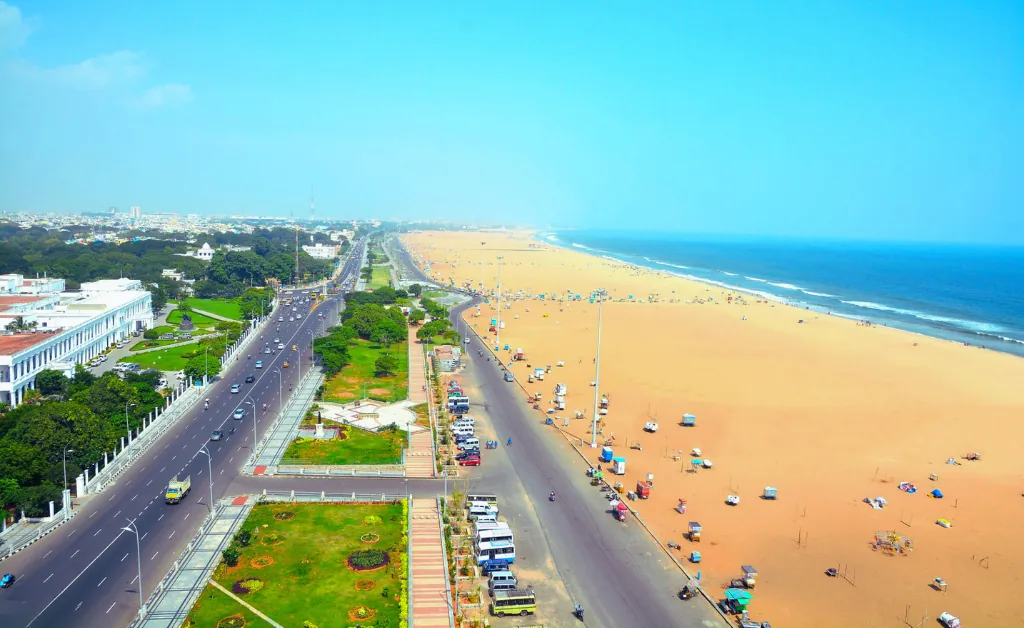
At 13 kilometres long, Marina is the second-longest urban beach in the world. But the stat alone doesn’t tell you what it actually is.
Marina is not a beach in the resort sense. Don’t swim — the undercurrents are dangerous — but do come for the atmosphere. Morning joggers, kite sellers, bajji stalls, cricket on sand. It’s the city at its most alive.
When to go: Early morning (6–8am) or evening after 5pm. Midday is brutal — the sand reflects heat like a pan, and there’s almost no shade.
Marina isn’t the only stretch of coastline worth your time — see our guide to all the beaches worth visiting around the city, including the quieter spots locals prefer.
Time needed: 1.5–2 hours
Kapaleeshwarar Temple — The Soul of Mylapore
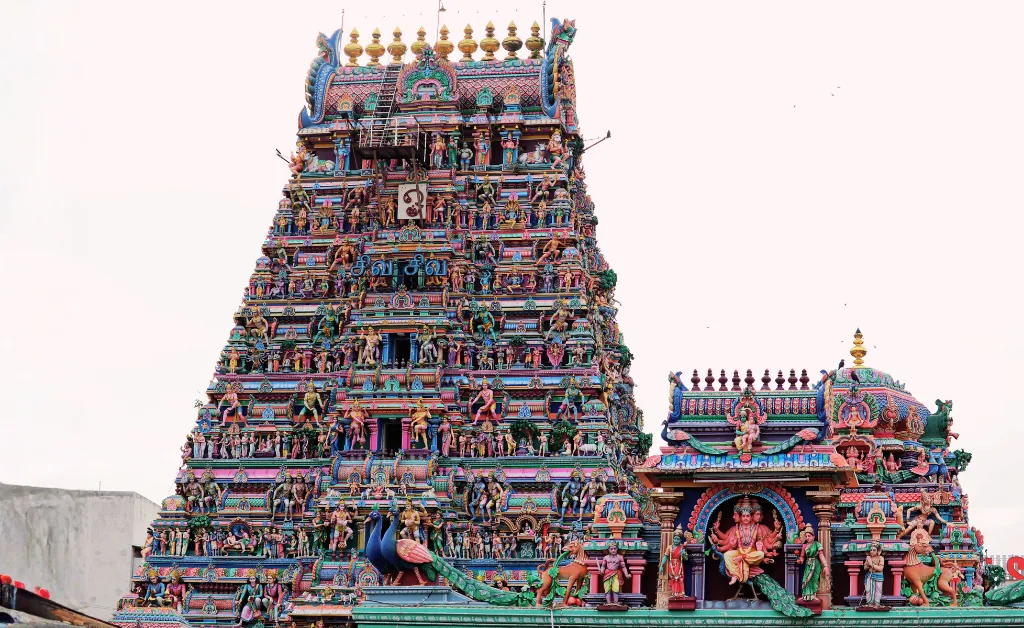
If Marina is Chennai’s living room, Kapaleeshwarar Temple is its beating heart.
Built in the Dravidian style, the temple is dedicated to Lord Shiva and is believed to be over 1,300 years old in its original form (the current structure dates to the 16th century after earlier versions were destroyed by Portuguese settlers). The towering gopuram (gateway tower) rises 37 metres above the street, covered in thousands of painted sculptures that tell stories from Hindu mythology. It’s one of the most visually extraordinary things in South India.
The temple is a working place of worship, not a museum. Priests perform rituals throughout the day. Pilgrims come from across Tamil Nadu. The air inside smells of camphor and jasmine. During the Panguni Uthiram festival (usually March–April), the streets around the temple host a massive procession that draws thousands.
Practical notes for first-timers:
- Dress code is strictly enforced. Men must remove their shirts before entering the inner sanctum (a dhoti or lungi can be borrowed at the gate). Women should wear a saree, salwar, or long skirt and top — no shorts, no sleeveless tops. Keep a shawl in your bag just in case.
- Non-Hindus can enter the outer courtyard freely. Access to the inner sanctum varies — some areas may be restricted. Respect signage and follow the lead of those around you.
- Photography rules: Allowed in the outer precincts, prohibited near the main shrine. Don’t point your camera at people mid-prayer.
- Best time to visit: Early morning (6:30–8am) before the crowds, or at dusk when the evening aarti (prayer ceremony) is performed with lamps and bells.
Time needed: 1–1.5 hours
Fort St. George — Where Colonial Chennai Begins
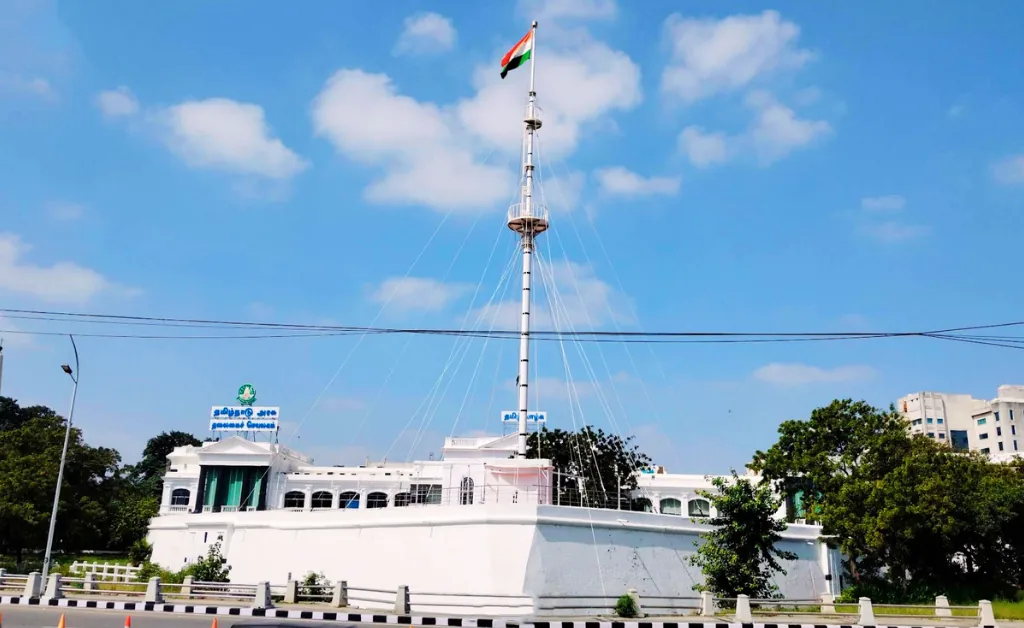
Built by the British East India Company in 1644, Fort St. George was the first English fortress in India. It’s still a working government complex today — the Tamil Nadu Legislative Assembly sits inside — which makes it one of the few active colonial-era forts anywhere in the world.
The Fort Museum inside is genuinely excellent and widely underrated. It contains the original flagpole (one of the tallest in Asia), Clive’s House (where Robert Clive once lived), and artefacts ranging from colonial-era coins to the personal effects of Elihu Yale — yes, that Yale, who made his fortune in Madras before endowing the university.
The St. Mary’s Church within the fort complex (built 1680) is the oldest surviving Anglican church in Asia. It’s modest, cool, and oddly moving.
History enthusiasts will find more to explore — we’ve covered Chennai’s most significant heritage landmarks in one place, from colonial ruins to ancient temple complexes.
What first-timers often miss: The museum’s upper floor, which documents the period of British administration in Madras with maps, paintings, and correspondence that offer a surprisingly balanced account of the colonial era.
Practical notes:
- Entry to the Fort Museum: ₹5 for Indian nationals, ₹100 for foreigners (prices as of 2025 — confirm on arrival as these are updated periodically)
- Open Tuesday to Sunday, 9am–5pm
- Allow 1.5–2 hours minimum, 3 hours if you’re a history enthusiast
- The fort is a 10-minute walk from Chennai Central railway station
DakshinaChitra — One Day, All of South India
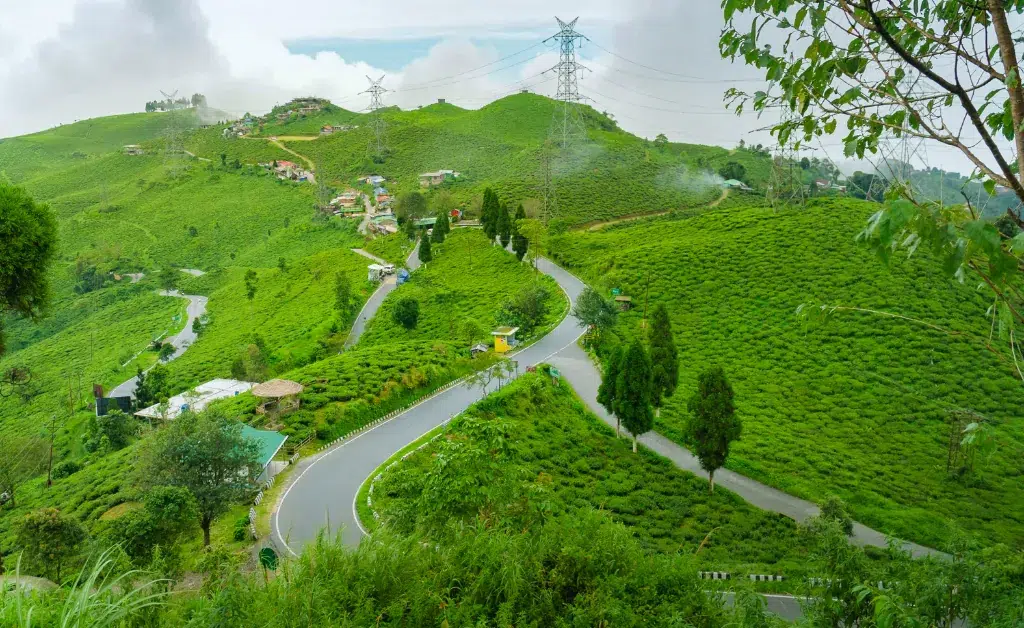
About 25km south of the city, on the East Coast Road, DakshinaChitra is one of the most thoughtfully designed heritage museums in India.
The premise is straightforward: take traditional homes from across Tamil Nadu, Kerala, Karnataka, and Andhra Pradesh, reconstruct them authentically on a single campus, and let visitors walk through them. A 200-year-old Brahmin house from Chettinad. A Kerala fisherman’s cottage. A merchant’s mansion from Karnataka. All meticulously rebuilt with original materials and furnished exactly as they would have been.
What could be a dry exercise in preservation becomes something genuinely alive. Craftspeople work on-site — potters, weavers, woodcarvers — and you can watch and buy directly from them. There are regular performances of Bharatanatyam and Kuchipudi in the open-air amphitheatre.
Why first-timers should prioritise this over more famous destinations: No other single place in Chennai gives you a more comprehensive understanding of South Indian domestic life and material culture. It’s the fastest way to context-set your entire trip.
Practical notes:
- Open Wednesday to Monday, 10am–6pm (closed Tuesdays)
- Entry: ₹150 for Indian adults, ₹300 for foreigners (2025 rates — verify on their website)
- Getting there: Hire an Ola/Uber or take a local bus from Adyar. The journey takes 40–50 minutes depending on traffic. Taxis from the city centre cost ₹400–600 one-way.
- Combine with a stop at Mahabalipuram on the same day (another 25km south) if you have the energy
Time needed: Half a day minimum
The Mylapore Lanes — Where the City Reveals Itself
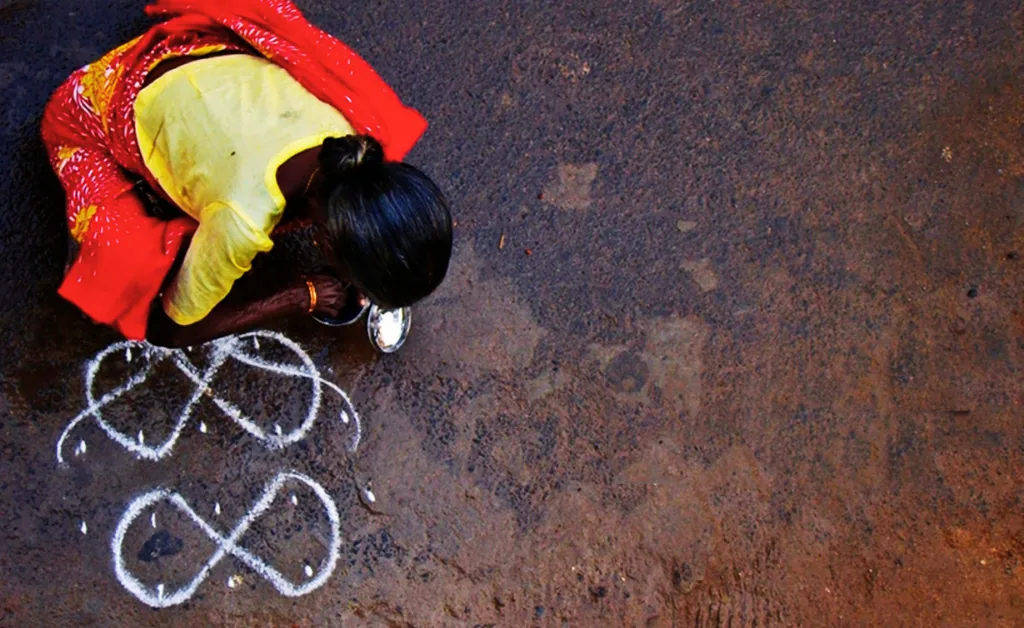
This deserves its own entry because it’s not a “sight” in the conventional sense — it’s an experience.
The grid of narrow lanes surrounding Kapaleeshwarar Temple in Mylapore is one of the most rewarding places to simply wander in all of South India. Every street holds something unexpected.
On one lane you’ll find a family running a brass-idol workshop out of their front room, the same mould-work that’s been in their family for generations. On the next, a fresh flower market where temple garlands are assembled by hand each morning at 4am. Further on, a 100-year-old Ayurvedic medicine shop with glass bottles floor to ceiling, still prescribing formulations written in palm-leaf manuscripts.
Specific spots worth finding:
- Luz Church Road — one of the oldest streets in Chennai, with Portuguese-era Luz Church at its end
- R.K. Mutt Road — the main artery of the neighbourhood, good for people-watching and street food
- The small sabhas (music halls) that dot the lanes, where evening practice sessions are sometimes audible through open doors in December
Allow yourself to get a little lost. That’s the point.
Best time: 7–10am when the markets are active and the light is best for photography.
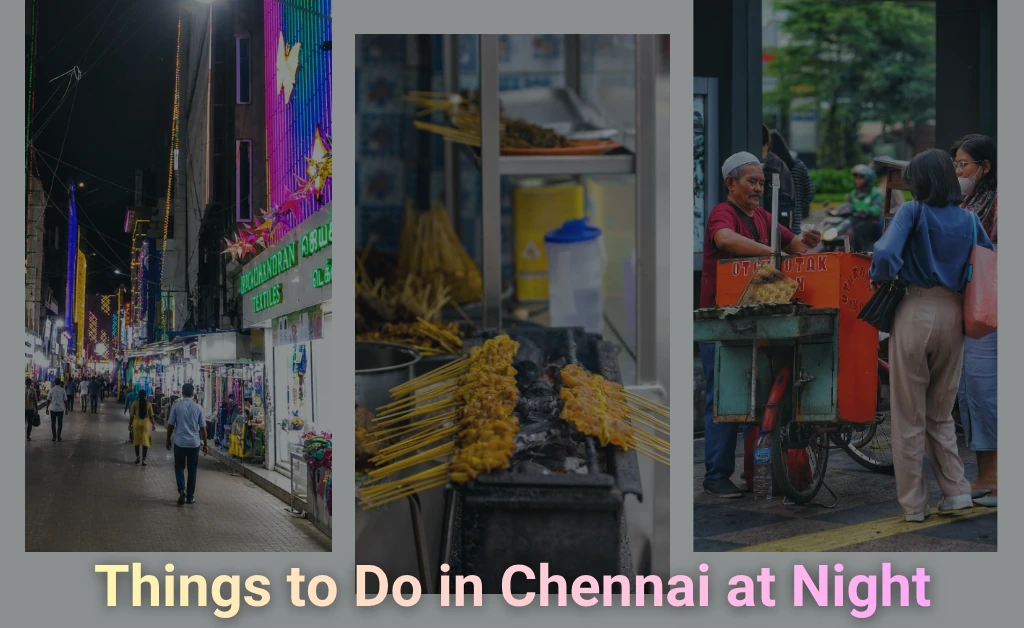 |
Best Things to Do in Chennai at Night The best things to do in Chennai at night include walking along Marina Beach, eating street food at Besant Nagar and Burma Bazaar, visiting VGP Snow Kingdom, many more |
Day Trips Worth Taking from Chennai
A good Chennai travel guide for first-timers can’t ignore what’s nearby. Some of the best things accessible from Chennai aren’t technically in Chennai at all.
- Mahabalipuram (Mamallapuram) — 60km south, 1.5 hours by road A UNESCO World Heritage Site containing some of the finest examples of Pallava-era rock-cut architecture in the world. The Shore Temple, the Five Rathas, and the massive Arjuna’s Penance bas-relief are all within walking distance of each other. The town itself is small, atmospheric, and easy to navigate. An ideal day trip — leave Chennai by 8am, be back by 7pm.
- Kanchipuram — 75km southwest, 1.5–2 hours by road One of the seven sacred cities of Hinduism, Kanchipuram is known for two things: its extraordinary temple architecture (the Ekambareswarar Temple complex alone is one of the largest in India) and its silk. Kanchipuram silk sarees are considered among the finest in the world, and you can visit weaving cooperatives to watch the process. Best done as an early morning start.
- Pondicherry — 160km south, 2.5–3 hours by road or rail The former French territory on the east coast is a complete contrast to Chennai — a quiet, planned town with pastel-coloured colonial buildings, French street names, and a tranquil seafront promenade. Sri Aurobindo Ashram draws spiritual visitors from around the world. Many travellers overnight here rather than treating it as a day trip. The drive along the East Coast Road is scenic and straightforward.
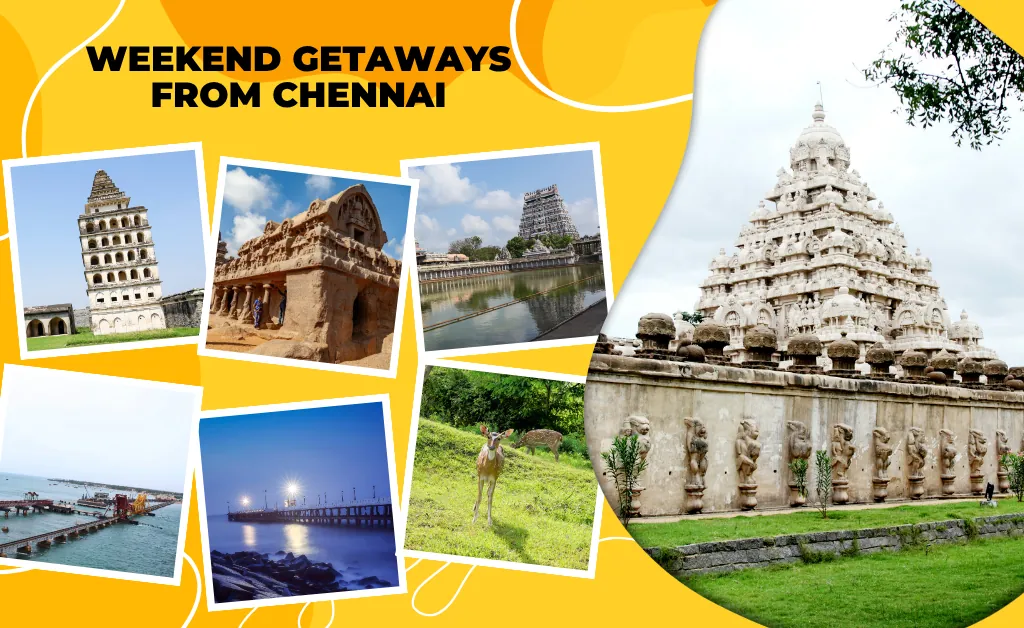 |
Best Weekend Getaways from Chennai This guide covers 15 hand-picked destinations, organised by travel time and type, so you can plan a real escape |
Amusement Parks & Family Attractions
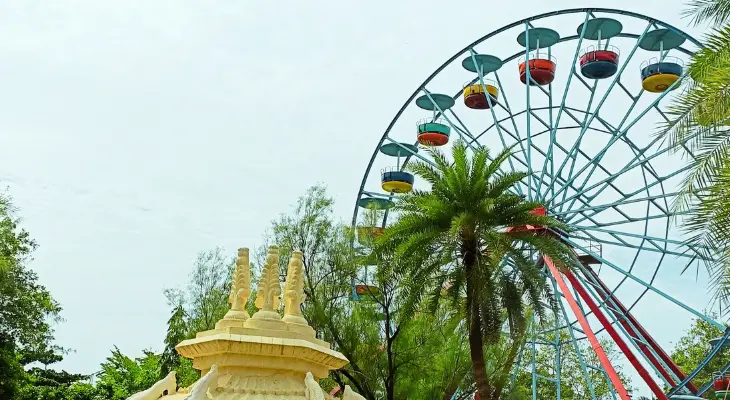
Chennai has a surprisingly strong lineup of amusement and water parks — great if you’re travelling with kids or just want a day of rides and water slides away from temple-hopping.
For a full comparison of entry fees, rides, and age suitability, check our guide to the top-rated amusement parks in Chennai with current ticket prices.
Here are the main options worth knowing about:
- Kishkinta (Tambaram) is one of Chennai’s oldest and most popular family parks, with both dry rides and water attractions spread across a large campus.
- VGP Universal Kingdom sits right on the ECR (East Coast Road) and combines a theme park, beach access, and a separate snow-themed indoor section. The VGP Snow Kingdom — an indoor snow park with real snow — is particularly popular with children and worth booking in advance during weekends.
- MGM Dizzee World on ECR is the closest equivalent to a large-format Indian theme park, with roller coasters, water rides, and regular shows.
- Wonderla Chennai is the newest and most technically advanced option, from the same chain as Wonderla Bangalore. High-speed rides, wave pools, and well-maintained facilities make it the top pick for thrill seekers.
- Queensland Amusement Park is a more budget-friendly option, suitable for younger children and families looking for a low-key outing.
What to Eat in Chennai — A First-Timer’s Food Guide
This section could be its own article. Chennai’s cuisine is not a subgenre of “Indian food” — it’s an entire culinary universe that most of the country has only a surface understanding of.
Here’s what you need to know.
The Must-Eats
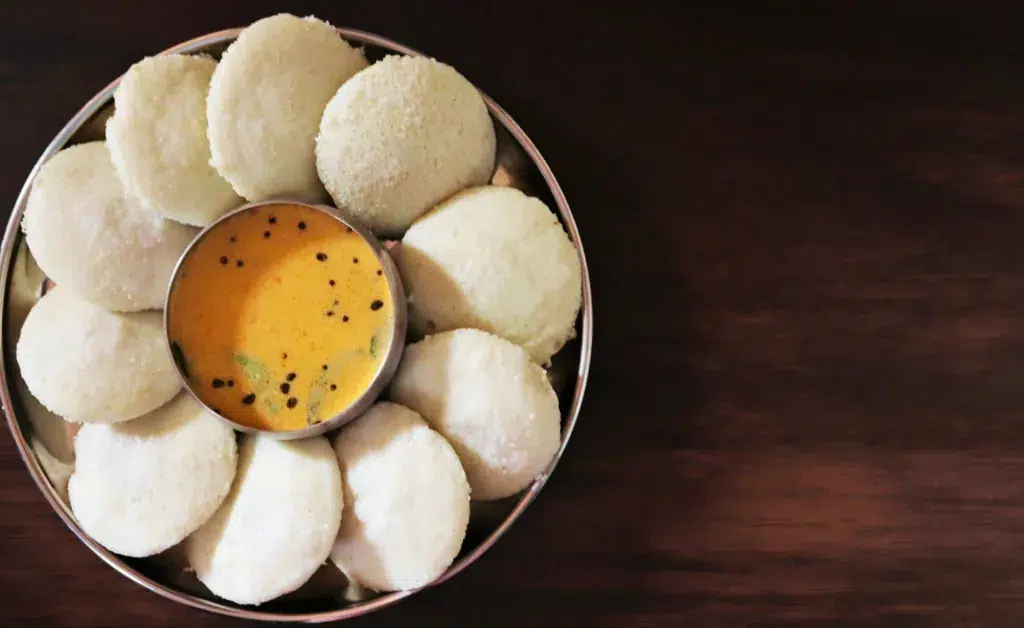
- Idli & Sambar — Fluffy fermented rice cakes with spiced lentil broth. Simple, perfect, cheap (₹40–70). Chennai’s version is lighter and more sour than anything you’ll find elsewhere.
- Masala Dosa — A thin, crispy rice crepe filled with spiced potato. If it bends without cracking, it’s not done right.
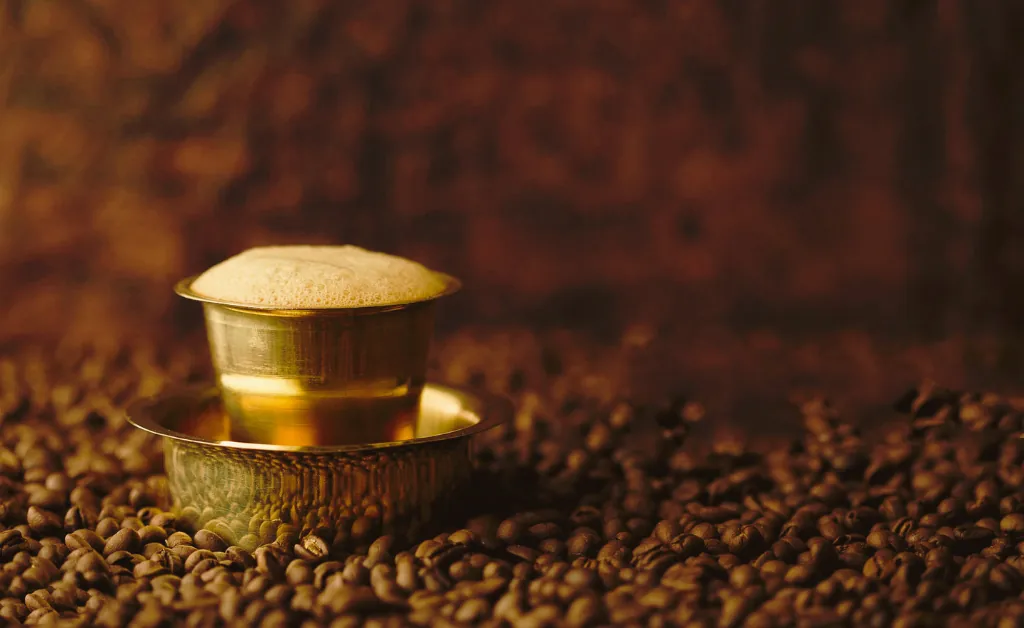
- Filter Coffee — Made by slowly dripping water through ground coffee, mixed with boiled milk, and poured between two steel tumblers to cool and froth it. This is a ritual, not just a drink. Order it everywhere.
- Chettinad Chicken Curry — Deeply spiced (not just hot) with rare spices like stone flower and star anise. Served with parotta or appam. Non-negotiable for non-vegetarians.
- Parotta & Salna — Flaky layered flatbread with a slow-cooked spiced meat gravy. Best from a roadside stall after 9pm.
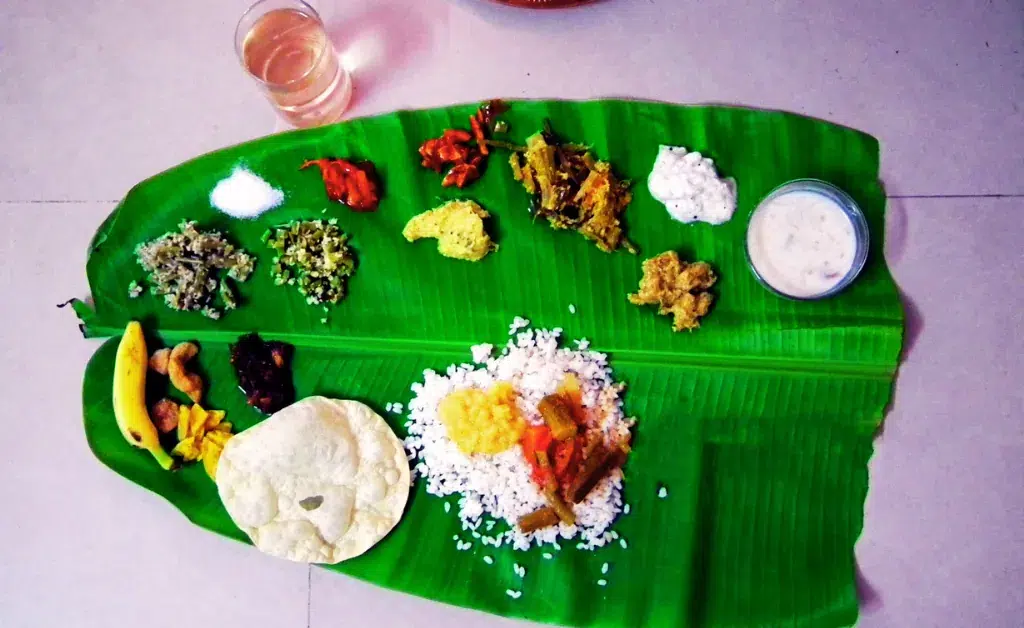
- Banana Leaf Meals — The traditional Tamil lunch. Rice in the centre, surrounded by sambar, rasam, 3–4 vegetable sides, papad, and pickle. Fold the leaf toward you when you’re done — it signals you’re full.
Where Locals Actually Eat — Not the Tourist Version
The best food in Chennai is almost never in a hotel restaurant or anywhere with photographs on the menu.
For breakfast/tiffin:
- Murugan Idli Shop (multiple branches, Mylapore branch is the best): The definitive Chennai tiffin experience. Arrive before 8:30am or expect a wait.
- Ratna Café, Triplicane: A Chennai institution since 1948. The sambar here has a following of its own — people travel specifically for it. Order the idli vada combo.
- Saravana Bhavan (multiple locations): The safe, reliable option for first-timers — consistent quality, English menus, and familiar enough for those nervous about diving straight into more local spots. Not the most exciting choice, but a solid baseline.
For a full South Indian meals (lunch):
Traditional Tamil lunch is served on a banana leaf — rice in the centre, surrounded by small portions of sambar, rasam, kootu, poriyal (dry vegetable stir-fry), papad, pickle, and a sweet. More is added as you eat, and it’s refilled without being asked until you place your palm face-down on the leaf to signal you’re done.
Good places for banana leaf meals:
- Annalakshmi (Teynampet): Vegetarian, run on a “pay what you can” model. One of Chennai’s most beloved lunch institutions.
- Hotel Palmgrove (Nungambakkam): Their weekday lunch thali is exceptional and completely unpretentious.
For non-vegetarian and Chettinad food:
- Anjappar Chettinad (multiple locations): The most accessible entry point to Chettinad cuisine, reliable and consistent.
- Ponnusamy Hotel (Egmore): No-frills, no-decor, but the pepper chicken and mutton curry are the real deal.
- Karthik’s, Hotel Junior Kuppanna (T. Nagar): Both are well-regarded local favourites for meat-heavy Tamil cooking.
Navigating Vegetarian and Non-Vegetarian Options
Chennai is excellent for both vegetarian and non-vegetarian travelers. Traditional vegetarian meals are widely available, while seafood, chicken, and mutton dishes are equally popular across the city.
Street Food Safety — Practical Notes
Chennai street food is generally safe. The high-volume, high-turnover nature of good street stalls means the food is almost always freshly prepared.
A few practical guidelines:
- Eat where there are people. A crowded stall is a safe stall. High turnover means nothing sits around.
- Prefer cooked over raw. Avoid cut fruit from carts in the midday heat. Opt for freshly prepared items you can see being made.
- Carry a small hand sanitiser. Most stalls are set up for eating with your hands, and washing facilities vary.
- Coconut water from vendors along the beach is perfectly safe and genuinely the best rehydration option in the heat.
- Ice in street drinks: Use your judgment. Well-established stalls with high traffic are generally fine. Avoid ice in drinks from very small operators.
Where to Stay
By Budget
Budget (₹800–1,800/night) Stay near Egmore or Chennai Central — good transport links, lots of options, functional and affordable. Best for backpackers or business travellers who just need a clean base.
Mid-range (₹2,500–5,500/night) Mylapore and T. Nagar are the best mid-range locations — central, walkable within the neighbourhood, close to food. Look for guesthouses and boutique properties rather than big chains.
Luxury (₹7,000+/night) The ITC Grand Chola (Guindy) and The Leela Palace (Adyar) are the two standout options — exceptional South Indian hospitality, excellent restaurants, and well-located for both the city centre and airport. Taj Coromandel (Nungambakkam) is the classic central choice.
Where to Stay Based on Your Trip Type
- First time, sightseeing focused → Mylapore or Egmore
- Business trip → OMR or Guindy (near the IT corridor)
- Beach and relaxed vibe → Besant Nagar (Elliot’s Beach area)
Mistakes to Avoid
- Underestimating the distances. Chennai is a large, spread-out city. What looks close on a map can be 45 minutes in traffic. Always check travel time, not just distance.
- Ignoring the dress code at temples. No shorts, no sleeveless tops. Men remove shirts before the inner sanctum at many temples. Keep a shawl or light scarf in your bag — it solves most problems instantly.
- Negotiating autos without a reference price. Before you get in, have a rough idea of what the fare should be (or just use Ola Auto). Walking away from an unreasonable quote always produces a better counter-offer.
- Visiting in October without a plan. The northeast monsoon is real. If you’re visiting October–November, watch the IMD forecast, have flexible bookings, and keep an indoor backup plan for each day.
- Skipping the tiffin. A surprising number of first-timers eat breakfast at their hotel and miss the best meal Chennai offers. Walk to the nearest tiffin house by 8am. This is where the city actually is.
- Planning too much in one day. Three sights with long midday gaps (for the heat) is more realistic than five sights with no breathing room. Chennai rewards slow travel.
Quick Practical Tips
| Topic | What You Need to Know |
| Currency | Indian Rupee (₹). ATMs widely available. UPI (Google Pay, PhonePe) accepted at most restaurants and shops |
| SIM card | Buy an Airtel or Jio SIM at the airport arrivals hall — bring your passport |
| Language | Tamil primarily. English works fine in hotels, restaurants, and tourist areas |
| Electricity | 230V, Type C/D/M plugs. Bring an adapter if coming from the UK or US |
| Water | Drink bottled or filtered water only. Avoid tap water |
| Dress | Lightweight cotton for the heat. Carry a scarf for temples |
| Emergency | Police: 100 |
| Best apps | Ola, Uber, Rapido (transport) · Chennai Metro app · Google Maps (works well here) |
Before You Go — A Quick Checklist
- Book train tickets 2–3 weeks ahead (especially December travel)
- Pack lightweight cotton clothing + one scarf/shawl
- Download Ola, Chennai Metro app, and Google Maps offline
- Get a Jio or Airtel SIM at the airport
- Plan your tiffin breakfast stop for Day 1 morning
- Check IMD weather forecast if visiting October–November
- Book accommodation at least 1 week ahead in peak season
FAQs
Q: How do I get from Chennai airport to the city centre?
A: The safest options are the pre-paid taxi counter inside the arrivals hall (₹400–600 to most city areas), or booking an Ola/Uber from the designated pickup zone. The Chennai Metro Green Line also stops at the airport and is the most affordable option at ₹15–50, though it’s less practical with heavy luggage.
Q: Is Chennai safe for solo travellers and tourists?
A: Chennai is generally considered one of the safer major cities in India. Petty crime exists, as it does everywhere, but violent crime targeting tourists is uncommon. Women travelling solo report that Chennai is more conservative in social norms than cities like Bengaluru, but also less aggressive in terms of unwanted attention in most areas. Normal city precautions apply.
Q: What language do people speak in Chennai, and will English work?
A: Tamil is the primary language. Most people in hotels, restaurants, tourist sites, and transport work speak enough English to communicate comfortably. In local markets and auto negotiations, some basic Tamil phrases (or gesturing) can help. Locals genuinely appreciate any attempt to engage in Tamil.
Q: When should I avoid visiting Chennai?
A: Avoid May and June if you are sensitive to heat — temperatures regularly exceed 40°C and the humidity is severe. October and early November bring the northeast monsoon; while this doesn’t necessarily ruin a trip, heavy rain and occasional flooding are real risks. If you travel during this period, buy comprehensive travel insurance.
Q: Is Chennai expensive compared to other Indian cities?
A: Chennai sits in the middle range. Street food and local meals are very affordable (₹50–150 for a full South Indian tiffin). Auto fares are reasonable. The main expense spike comes with mid-range and luxury hotels in prime locations, which price comparably to Bengaluru or Mumbai. Budget accommodation near Egmore can be as low as ₹800–1,500 per night.
Q: Do I need to book things in advance for a Chennai trip?
A: Train tickets absolutely — book 2–3 weeks ahead, especially for December travel. Restaurant reservations are generally not required except for fine dining. Temple entry is free and walk-in. Hotel rooms in good locations should be booked at least a week ahead during peak season (December–February).
Final Thoughts
Chennai is a city that doesn’t meet you halfway — you have to come to it. But once you do, it gets under your skin in a way that few Indian cities manage.
The filter coffee alone is worth the trip.
Start in Mylapore, eat well, and let the city show you what it is. You won’t regret it.